



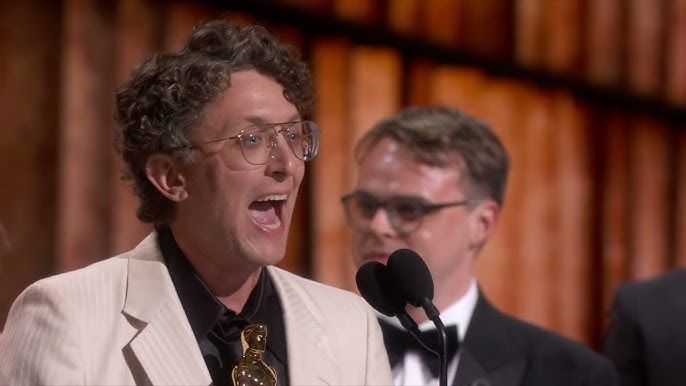
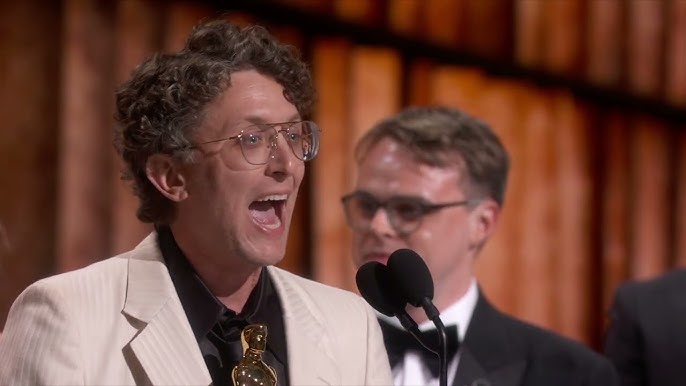
A surprise Oscars win quickly turned political after Mr. Nobody Against Putin took home Best Documentary Feature—and its director used the moment to draw a comparison that’s already generating debate.
Director David Borenstein, accepting the award on stage, framed the film as a warning about how societies change over time. But it was his remarks backstage that drew even more attention, as he reflected on conversations with Russian collaborators while making the documentary.
According to Borenstein, those collaborators pushed back when he tried to compare the U.S. to Russia, arguing that the pace of political change in America felt faster than what they had experienced in Russia’s early years.
The film itself follows Pavel “Pasha” Talankin, a teacher in a remote Russian town who resisted government directives to promote anti-Ukraine messaging in schools. Through his story, the documentary explores how pressure, compliance, and small decisions can shape larger national outcomes.
On stage, Borenstein emphasized that theme, describing how change doesn’t happen all at once, but through what he called “countless small acts” that accumulate over time. His message focused on individual responsibility and the choices people face when confronted with authority and control.
Backstage, Talankin also spoke about the risks involved in bringing the story to the screen. He described a tense moment while leaving Russia with footage and materials, noting that authorities had the power to search his belongings and review his communications.
The combination of a politically charged speech and a high-stakes real-life story has kept the documentary in the spotlight following its Oscar win. While the film was already gaining attention for its subject matter, Borenstein’s comments have added a new layer of conversation—one that extends beyond cinema and into broader global debates.